
Where Will Legislators Drink After Midnight?

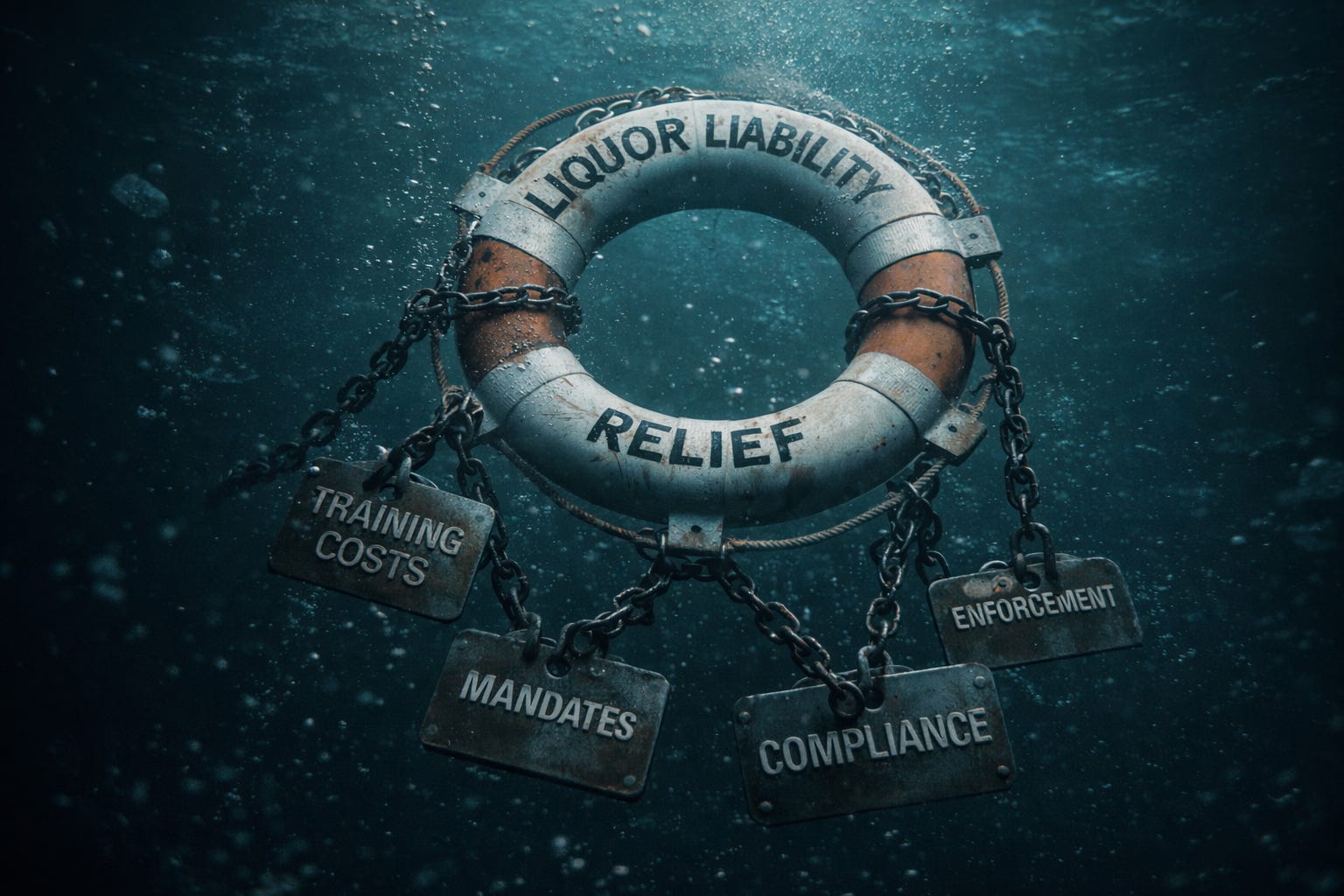
For years, South Carolina lawmakers have promised bars and restaurants relief from skyrocketing liquor liability insurance costs. Now that the so-called solution is being implemented, the people who actually run these businesses are discovering a hard truth: the cure may be worse than the disease.
This week, Kristian Niemi, owner of Bourbon Columbia, posted a blunt and revealing account of a Department of Revenue webinar explaining the new alcohol legislation. Bourbon sits directly across from the Statehouse. It is where legislators gather after session. It is where political events are hosted. If anyone understands both sides of this issue, it’s Niemi.
His takeaway was devastating.
The Cost of “Relief”
Under the new law, businesses are told they can lower their required insurance coverage if they comply with a long list of mandates. In practice, those mandates come with massive new costs.
Every employee must now undergo alcohol server certification that costs $50 per person, plus six hours of paid time per employee. That includes four hours of online training and a two-hour test. For restaurants with large staffs or catering operations relying on temporary workers, the burden is staggering. Any worker who logs ten hours or more is considered an employee and must be certified.
This is not a small tweak. It is a structural cost increase disguised as reform.
An HR and Enforcement Nightmare
Compliance does not stop with training. Employers must maintain physical copies of every employee’s certification, and employees must also carry proof themselves. Failure to produce documentation counts as a violation. Two violations trigger a mandatory 14-day license suspension.
And those violations are not limited to training issues. Any alcohol-related infraction can count.
As Niemi put it plainly, the law contains enormous loopholes that give regulators wide latitude to shut businesses down. What was sold as relief now feels like expanded enforcement authority.
ID Scanners and Privacy Risks
For businesses open past midnight, the law requires ID scanners that can cost $1,000 or more. Additional fees apply if the scanner verifies passports or foreign IDs.
But the real concern is not the price. These scanners store personal data and, in some cases, criminal history. Who has access to that data? Who is liable if it is misused? The Department of Revenue could not give clear answers.
For women, or anyone in a vulnerable situation, this is not a hypothetical risk. It is a serious safety concern. And once again, liability may fall back on the business owner.
No Guarantee of Insurance Savings
Perhaps the most damning revelation came from an insurance agent on the call. While lawmakers tout reduced minimum coverage levels, many reputable insurers simply will not write policies below $1 million anyway.
So businesses are being asked to spend more money, accept more regulatory risk, and fundamentally change how they operate — without any assurance their insurance premiums will actually go down.
Stop Being a Bar If You Want to Stay Open
The practical impact is clear. Serve alcohol after midnight and you cannot allow anyone under 21 inside. That includes parents with children in food-serving establishments. It raises absurd questions for hotels, late-night kitchens, and mixed-use spaces.
For Bourbon Columbia and many others, the conclusion was unavoidable.
They will no longer be open past midnight.
Read that again. The “solution” to liquor liability is effectively telling bars to stop being bars.
So where will all those legislators who act like kids off to college drink once the bars close?
A Broken Process, Not a Broken Industry
Niemi ended his post with a line that should haunt lawmakers:
“I regret ever approaching our legislators to ‘fix’ this.”
That is the real indictment.
This legislation does not limit liability. It does not reform the lawsuit system driving insurance costs. It does not rein in excessive verdicts or contingency fees. Instead, it shifts cost, risk, and compliance burdens onto small businesses while expanding regulatory power.
Meanwhile, lawmakers congratulate themselves.
Bars and restaurants are closing. Owners are scaling back hours. Workers are losing shifts. And the people who were promised relief are left wondering how a legislature dominated by lawyers keeps producing laws that make things worse.
If this is what reform looks like, it is no wonder South Carolina’s hospitality industry is losing faith.